The Economics of the FIFA World Cup: Where Blockchain Fits Into Global Football Finance
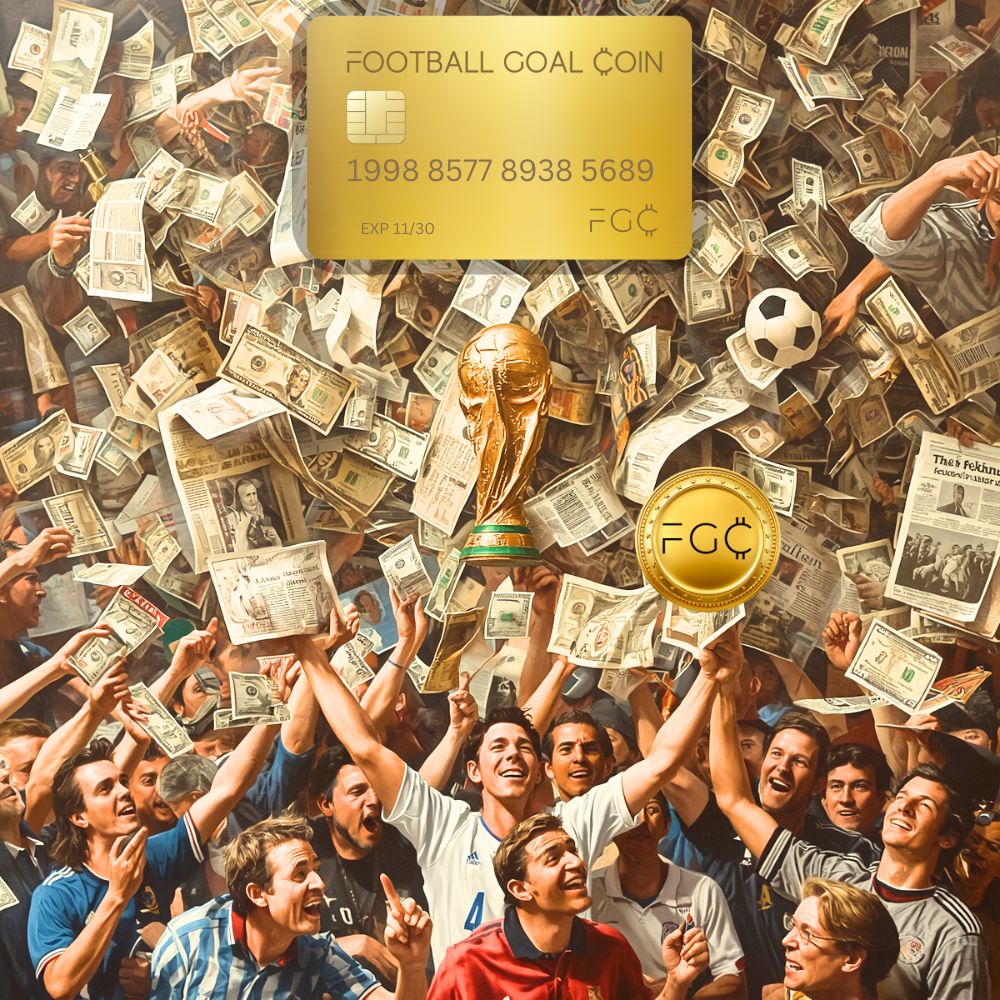
The FIFA World Cup is not just one of the biggest tournaments in football. It is also one of the largest global sporting events, attracting worldwide attention, media coverage, sponsors, broadcasters, and supporters across many countries.
Every tournament creates a huge amount of football activity. Matches, goals, results, statistics, and historic moments are followed by supporters around the world in real time.
As digital technology continues to develop, blockchain provides a new way to record, verify, and connect digital activity to real-world events. For Football Goal Coin, this connection is focused on professional football goals, FGC mining, and the FGC Blockchain.
Understanding the Traditional World Cup Economy
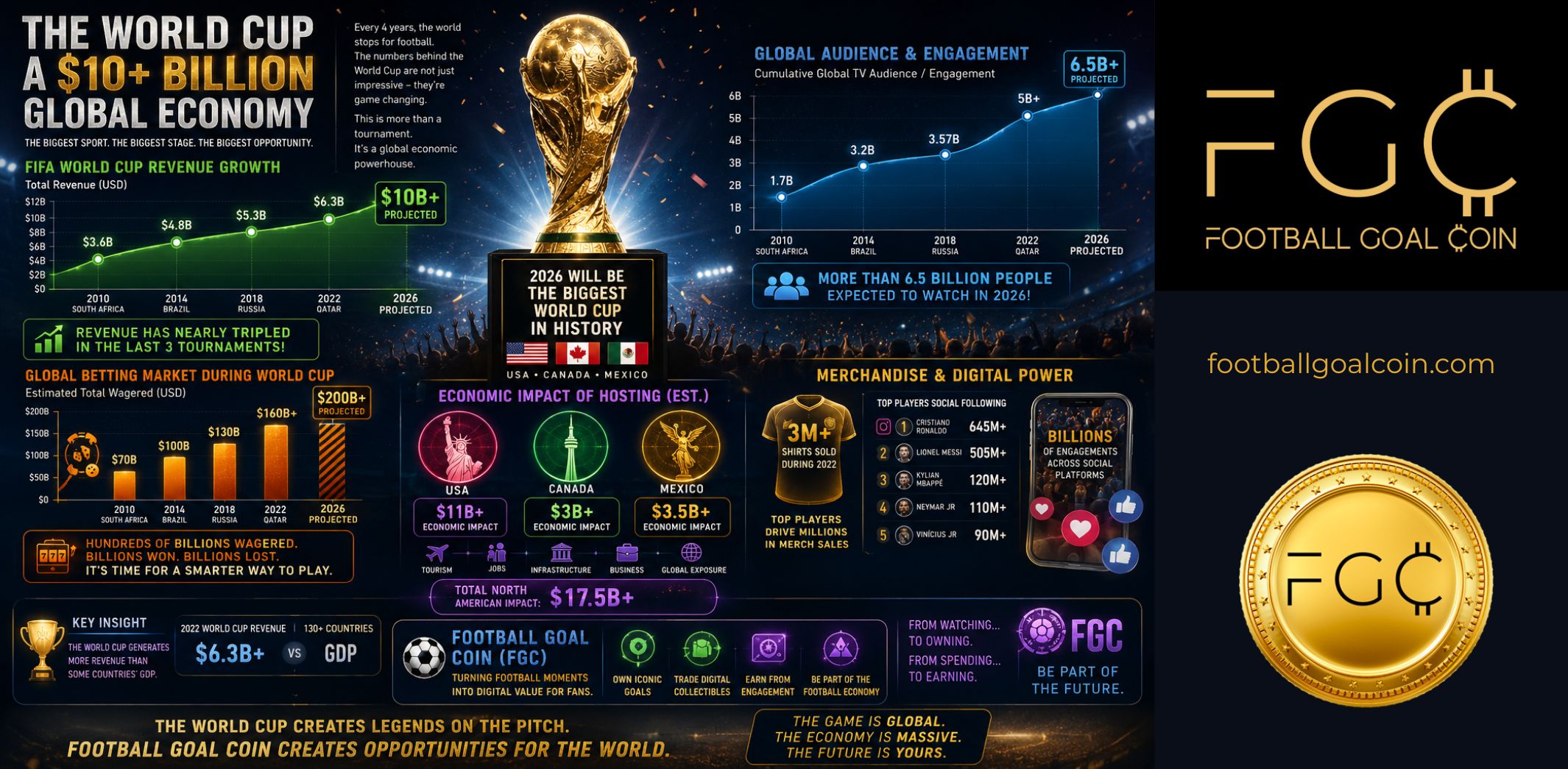
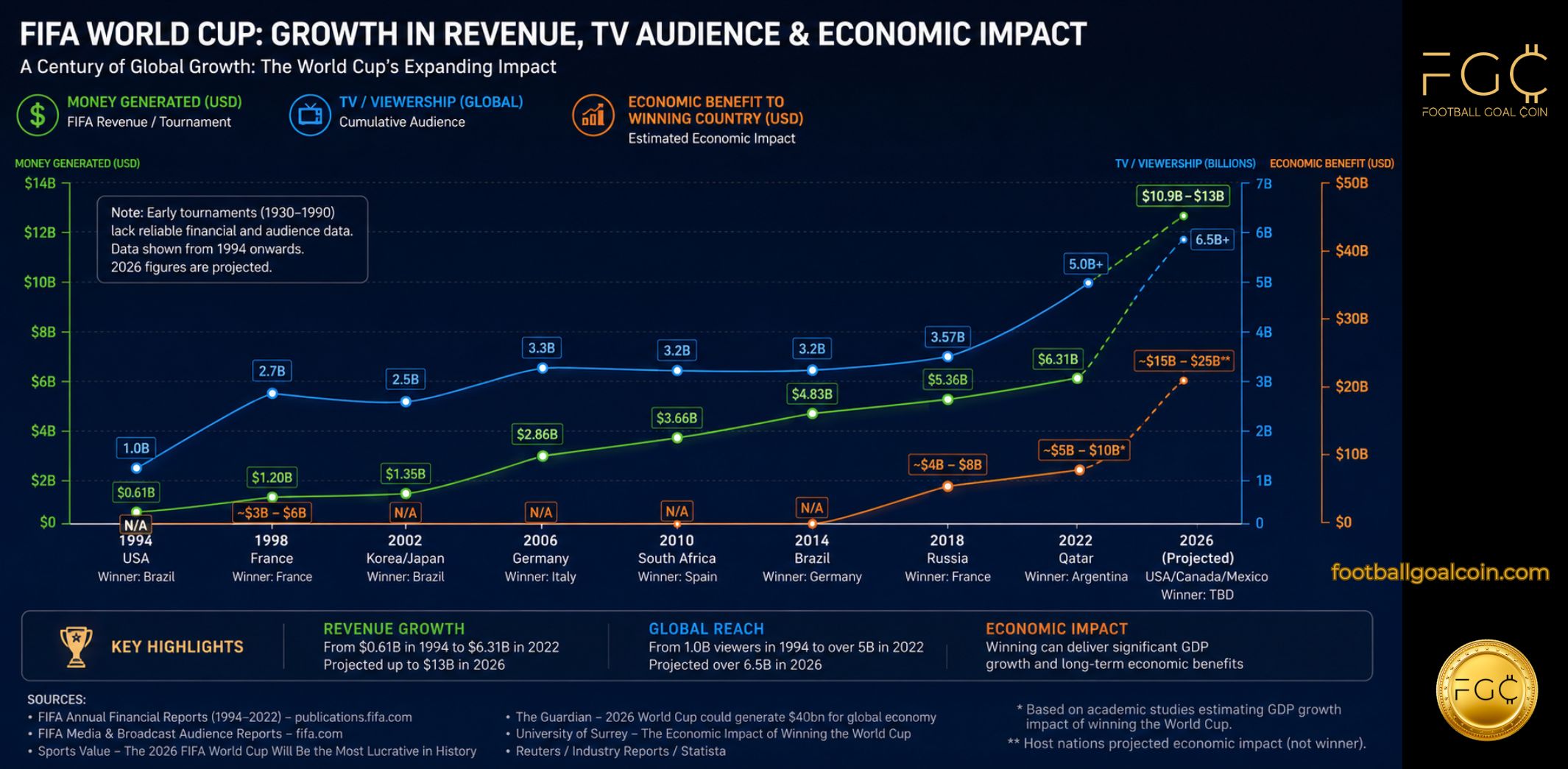
The World Cup has traditionally been built around major commercial activity, including broadcasting, sponsorship, ticketing, hospitality, licensing, and merchandise.
These areas show the huge global reach of football and the level of attention created by major tournaments.
For Football Goal Coin, the key point is not the financial structure of the World Cup itself. The key point is that major football events create professional football goals, and professional football goals are central to the FGC mining model.
Where Blockchain Fits
Blockchain technology can support transparent, verifiable, and structured digital records. It can be used to record activity on a dedicated network and provide visibility over blockchain-based transactions and issuance.
For Football Goal Coin, blockchain is used as the technical foundation for FGC mining and blockchain-based coin issuance.
The FGC Blockchain is designed to record, verify, and support the movement and issuance of Football Goal Coin. This makes it central to the way FGC mining operates.
Football Goals as Blockchain Events
Football goals are among the most important moments in the sport. They can decide matches, change tournaments, and create global attention.
The Football Goal Coin model connects professional football goals to blockchain-based coin issuance.
Through FGC mining, professional football goals are linked to the issuance of new FGC cryptocurrency on the FGC Blockchain.
This creates a clear relationship between real football activity and blockchain technology.
How the FGC Mining Model Works
Traditional cryptocurrency mining is usually based on computer power and complex calculations. Football Goal Coin takes a different approach.
FGC mining is built around professional football goals. When goals are scored in professional football, the goal mining model connects that football activity to blockchain-based issuance through the FGC Blockchain.
The model is focused on:
- Professional football goals
- FGC mining activity
- Blockchain-based coin issuance
- Recording activity on the FGC Blockchain
- Verification of blockchain activity
- A football-focused blockchain network
The Role of the FGC Blockchain
The FGC Blockchain provides the technical foundation for Football Goal Coin.
It is designed to support:
- The movement and issuance of Football Goal Coin
- FGC mining
- Blockchain-based coin issuance
- Transparent recording of FGC activity
- Verification of blockchain transactions
- Fast and efficient blockchain performance
This helps ensure that FGC mining activity can be recorded in a secure, transparent, and organised way.
Why the 2026 World Cup Matters
The FIFA World Cup 2026 is expected to generate major global attention because of its expanded format, international reach, and worldwide audience.
For Football Goal Coin, the importance of the World Cup is connected to the role of goals in football. Goals are central to the tournament, and goals are also central to the FGC mining model.
Major football events help demonstrate why professional goals are powerful moments and why they can form the basis of a football-focused blockchain mining system.
Blockchain, Transparency, and Football Activity
One of the important strengths of blockchain technology is transparency. Activity recorded on a blockchain can be visible, verifiable, and structured.
For Football Goal Coin, this matters because FGC mining depends on the clear connection between professional football goals and blockchain-based issuance.
The FGC Blockchain supports this by providing a dedicated network for recording and verifying FGC activity.
A Clear Focus for Football Goal Coin
Football Goal Coin is focused on the FGC Blockchain, FGC mining, and blockchain-based coin issuance connected to professional football goals.
This website does not provide exchange services, wallet custody services, payment services, investment services, financial advice, lending services, borrowing services, or trading services.
As the wider Football Goal Coin ecosystem develops, other services, tools, websites, or resources may be operated separately where appropriate.
Summary
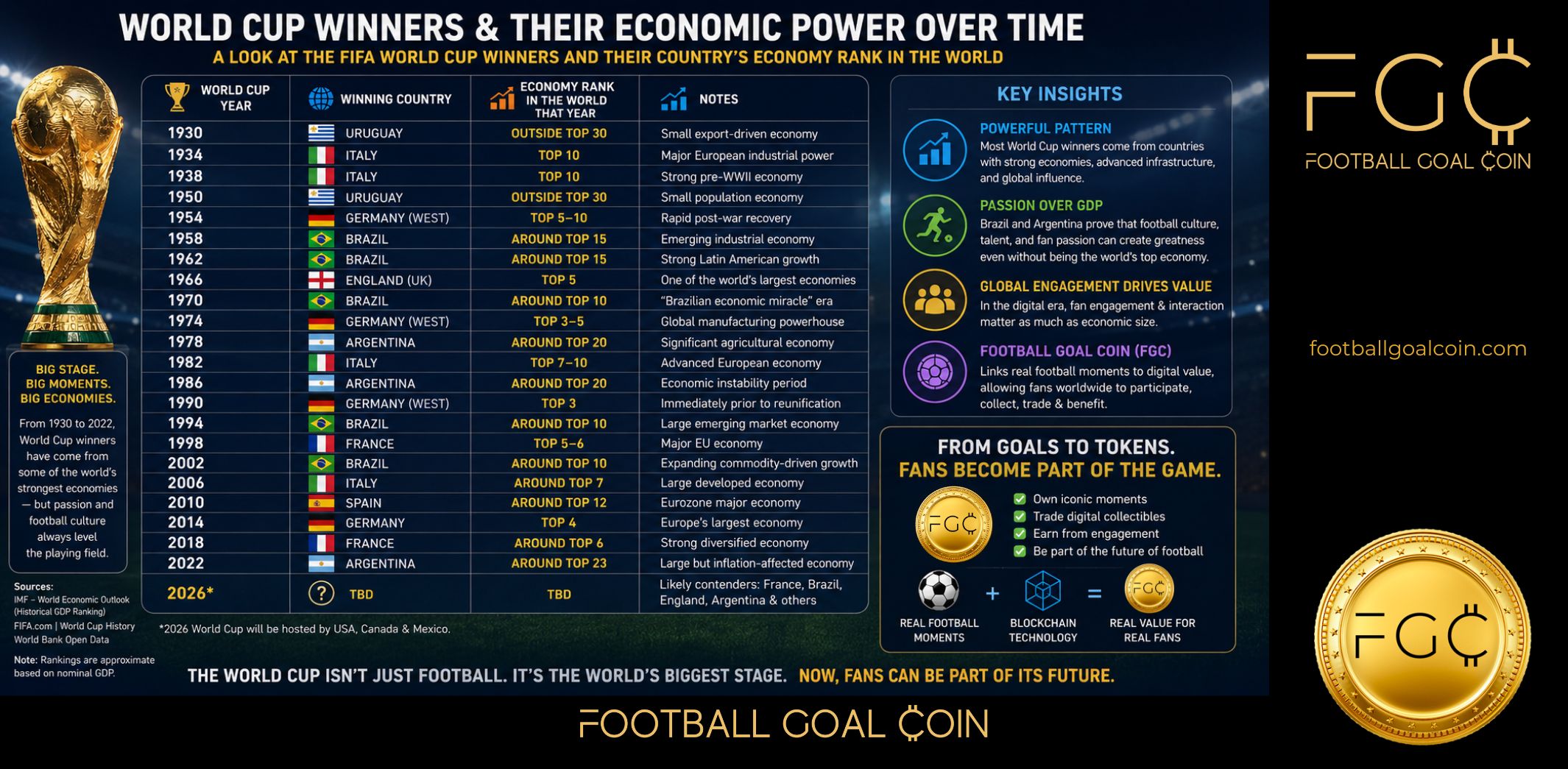
The economics of the FIFA World Cup show the scale, reach, and importance of global football.
For Football Goal Coin, the most important part of that global football activity is the professional goal. Goals are the foundation of the FGC mining model.
By connecting professional football goals to blockchain-based coin issuance, Football Goal Coin brings together football and blockchain through the FGC Blockchain.
The focus is clear: professional football goals, FGC mining, and blockchain-based issuance on the FGC Blockchain.
Football Goal Coin is independent and is not affiliated with, endorsed by, or officially connected to FIFA or the FIFA World Cup.