The World Cup, Global Economies and the Rise of Football Goal Coin
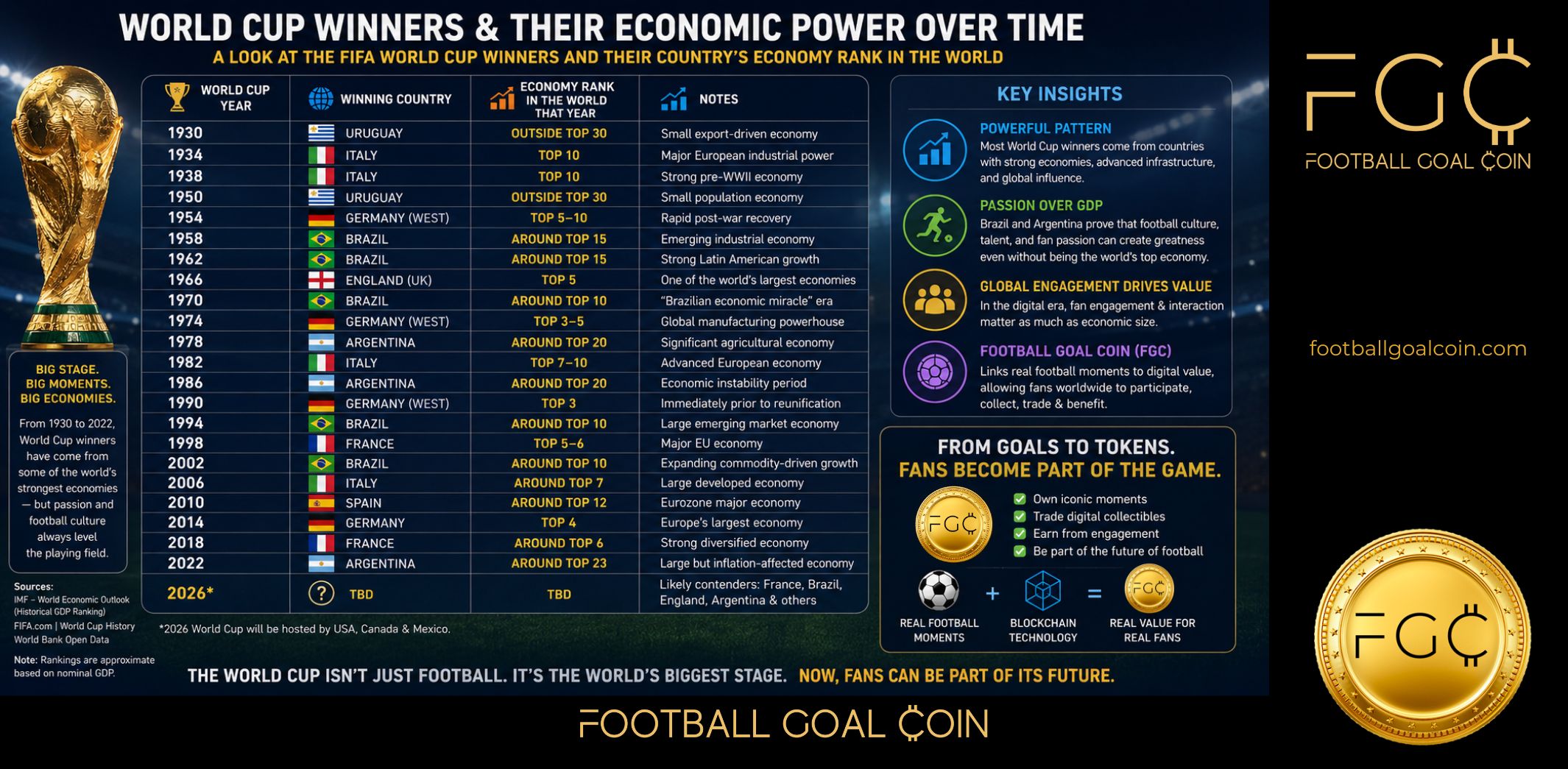
The FIFA World Cup has always been more than football.
It is one of the largest sporting events in the world, one of the biggest drivers of global football attention, and one of the most emotionally powerful competitions in sport.
Every tournament creates unforgettable matches, historic goals, major talking points, and moments that are remembered by supporters across generations.
For Football Goal Coin, this matters because professional football goals are central to the FGC mining model.
The World Cup as a Global Football Event
The FIFA World Cup brings together national teams, professional players, supporters, broadcasters, media attention, and football communities from across the world.
It creates a global focus on:
- Professional football matches
- Goals
- Results
- Player performances
- Tournament progression
- Historic football moments
This level of attention shows why football remains one of the most powerful global sports.
Why Goals Are the Central Point
Football is built around goals.
A goal can decide a match, change a tournament, create a national celebration, or become part of football history.
Some goals are remembered because of the player. Others are remembered because of the timing, the match, the nation involved, or the significance of the moment.
Football Goal Coin uses the importance of professional football goals as the foundation of its mining model.
Connecting Football Goals to Blockchain Technology
Football Goal Coin is built around a specific idea: professional football goals can be connected to blockchain-based coin issuance.
Through FGC mining, professional football goals are connected to the issuance of new FGC cryptocurrency on the FGC Blockchain.
This creates a clear relationship between football activity and blockchain technology.
The focus is not trading, betting, financial speculation, or investment activity. The focus is professional football goals, FGC mining, and blockchain-based issuance.
How FGC Mining Works
Traditional cryptocurrency mining is usually based on computer power, hardware, energy use, and complex calculations.
Football Goal Coin takes a different approach.
FGC mining is designed around professional football goals. When professional goals are scored, the goal mining model connects that football activity to blockchain-based coin issuance through the FGC Blockchain.
This means the Football Goal Coin model is built around:
- Professional football goals
- FGC mining activity
- Blockchain-based coin issuance
- FGC Blockchain recording
- Verification of FGC activity
- Football-focused blockchain infrastructure
The Role of the FGC Blockchain
The FGC Blockchain is the dedicated network designed to record, verify, and support Football Goal Coin activity.
It provides the technical foundation for FGC mining and blockchain-based coin issuance connected to professional football goals.
The blockchain supports the recording and verification of FGC activity in a structured and transparent way.
Not All Goals Are Remembered the Same Way
In football, every goal matters on the scoreboard. However, some goals become more memorable because of their football significance.
Examples may include:
- A last-minute winner
- A goal in a World Cup final
- A semi-final decider
- A host nation goal
- A goal in a major upset
- A record-breaking goal
- A goal by a globally recognised player
These goals may attract more attention from supporters because of their emotional, historical, or sporting importance.
However, this does not mean that the FGC Blockchain gives any individual goal greater financial value.
Important Clarification
The FGC mining system does not mathematically, financially, or systemically recognise one individual goal as being worth more than another unless this is expressly stated within the technical rules of the FGC mining model.
Nothing in this article should be understood as saying that any FGC coin, NET, goal, player, nation, match, or tournament moment has a guaranteed or greater financial value.
Some supporters may personally attach greater emotional, historical, or football significance to certain goals, matches, players, or tournament moments. That personal interest is separate from the technical purpose of this website.
Why 2026 Matters
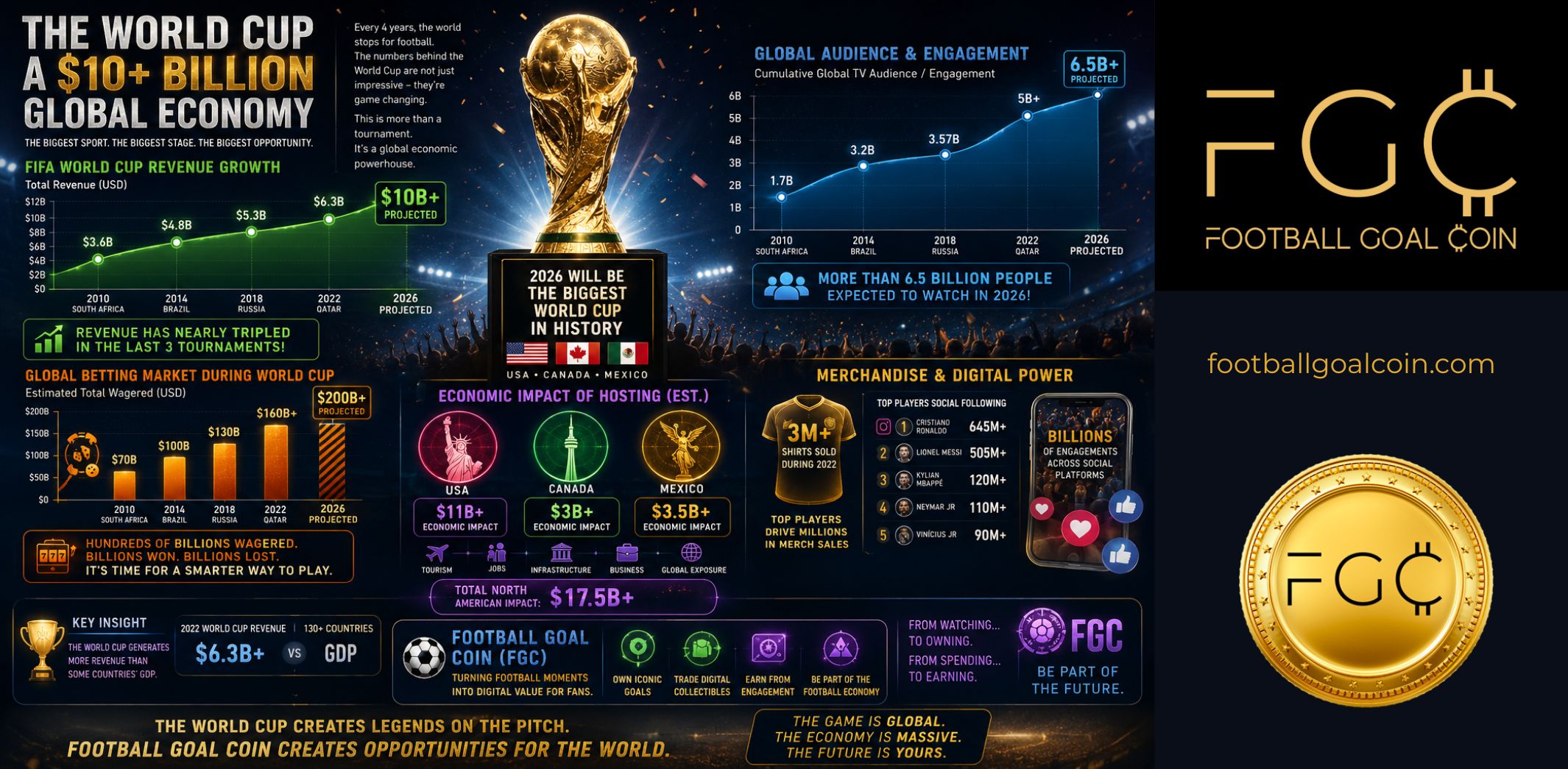
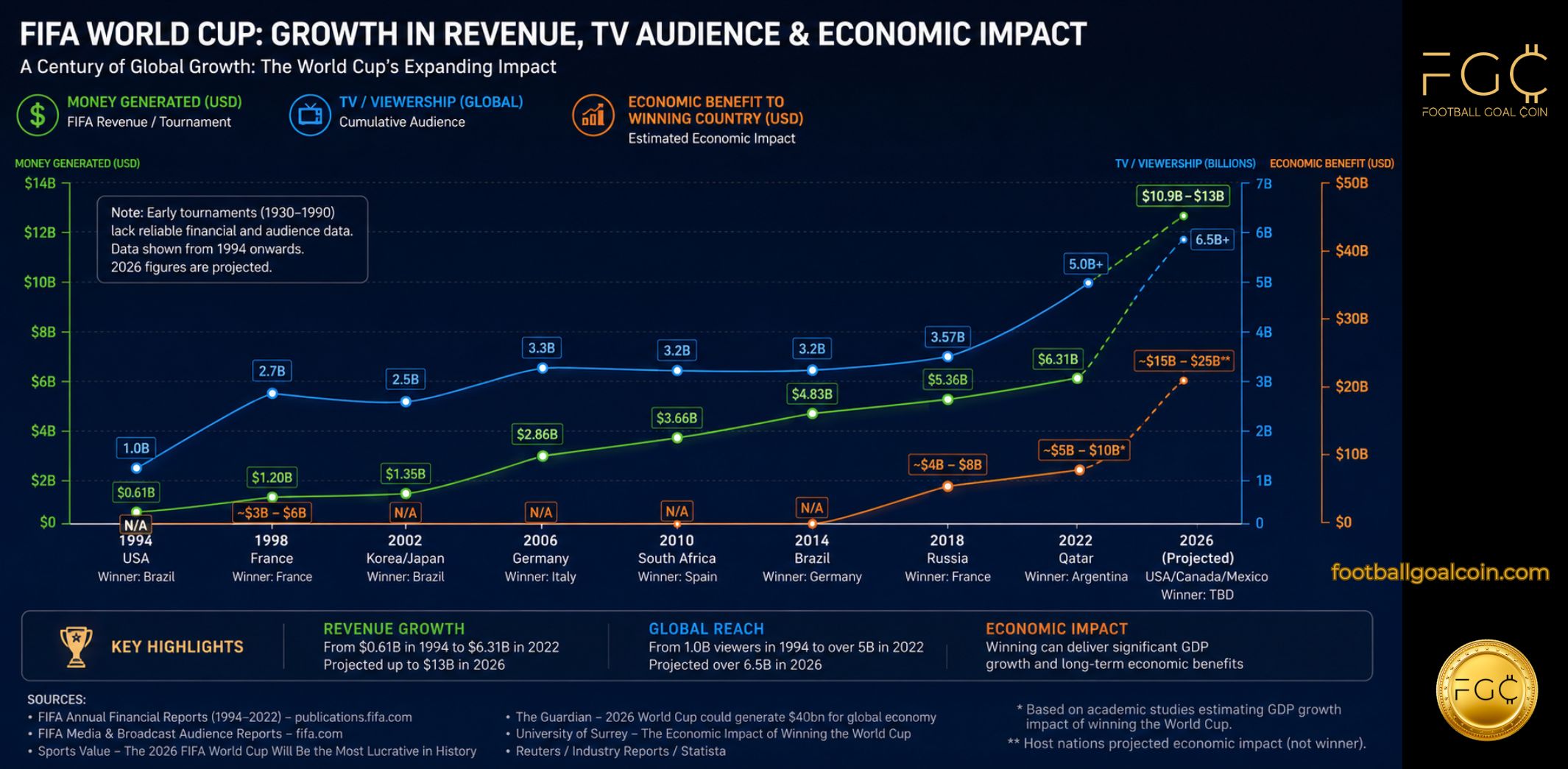
The FIFA World Cup 2026 is expected to be one of the largest football tournaments ever held because of its expanded format and its hosting across the United States, Canada, and Mexico.
For Football Goal Coin, the relevance is simple: major football tournaments create professional football goals, and professional football goals are central to FGC mining.
The World Cup provides a clear example of how football moments can capture global attention and why goals remain the most important events in the sport.
Football as a Familiar Starting Point
Many people find cryptocurrency and blockchain difficult to understand when they are explained only through technical language.
Football provides a more familiar starting point.
Supporters already understand goals, matches, tournaments, players, and major moments. Football Goal Coin connects those familiar football concepts to blockchain-based coin issuance through FGC mining.
A Clear Focus for Football Goal Coin
Football Goal Coin is focused on the FGC Blockchain, FGC mining, and blockchain-based coin issuance connected to professional football goals.
This website does not provide exchange services, wallet custody services, payment services, investment services, financial advice, lending services, borrowing services, betting services, prediction markets, staking services, or trading services.
As the wider Football Goal Coin ecosystem develops, other services, tools, websites, or resources may be operated separately where appropriate.
Final Thoughts
The FIFA World Cup shows how powerful football truly is. It crosses borders, languages, and cultures in a way very few events can.
Football Goal Coin connects that global football passion with blockchain technology through FGC mining and the FGC Blockchain.
The model is built around professional football goals and blockchain-based coin issuance, creating a football-focused approach to cryptocurrency mining.
The focus is clear: professional football goals connected to blockchain-based coin issuance through FGC mining on the FGC Blockchain.
Football Goal Coin is independent and is not affiliated with, endorsed by, or officially connected to FIFA or the FIFA World Cup.